
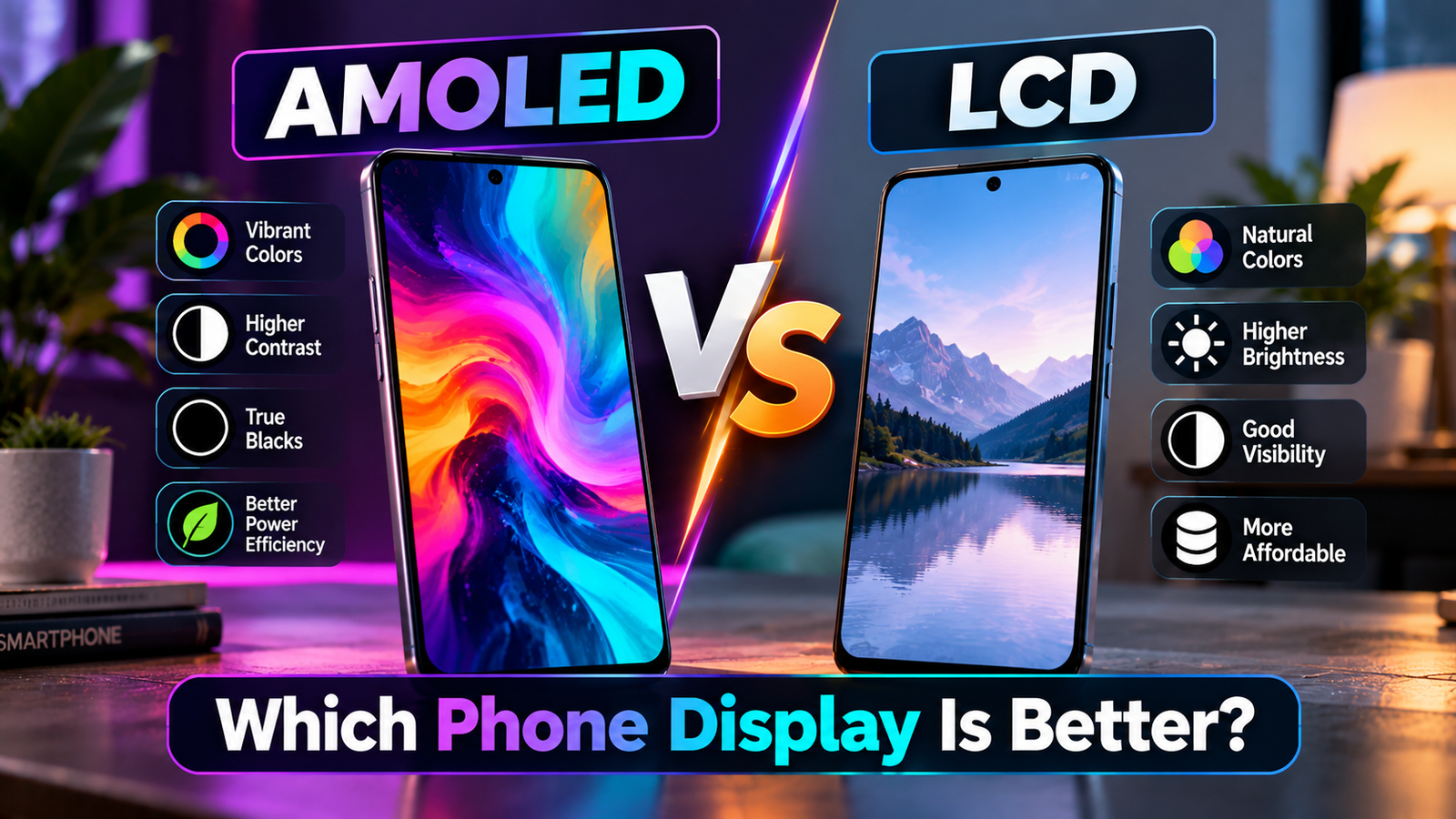
When buying a new smartphone, most people look at the processor, camera and battery first. But the display is just as important, especially if you spend a lot of time watching videos, browsing social media or reading on your phone.
The problem is that smartphone specifications often use terms like AMOLED, Super AMOLED, LCD, 90Hz and 120Hz. If you are not familiar with display technology, it can be difficult to understand what these terms actually mean.
Both AMOLED and LCD displays can be good. The difference is that they have different strengths.
If you want deeper blacks, stronger contrast and a more premium-looking screen, AMOLED is generally the more attractive option. LCD phones, on the other hand, can still be a very practical choice, especially when you are shopping on a tighter budget.
In this guide, we will compare AMOLED vs LCD in simple terms and look at some real smartphone examples that Pakistani buyers may consider.
Quick Answer: AMOLED or LCD — Which Is Better?
If we are talking purely about display quality, AMOLED generally offers the better viewing experience.
Its biggest advantages are deeper blacks, higher contrast, vibrant colors and a more premium-looking image.
LCD’s biggest advantage is usually price. Manufacturers can use LCD panels in more affordable smartphones while keeping the overall cost of the phone lower.
A simple way to look at it:
- Best picture quality: AMOLED
- Deep blacks and contrast: AMOLED
- Premium viewing experience: AMOLED
- Budget smartphones: LCD can still be a practical choice
- Overall value: Depends on the complete phone and its price
However, you should not buy a phone simply because it has an AMOLED display. Resolution, brightness, refresh rate and overall panel quality also matter.
AMOLED vs LCD: What Is the Actual Difference?
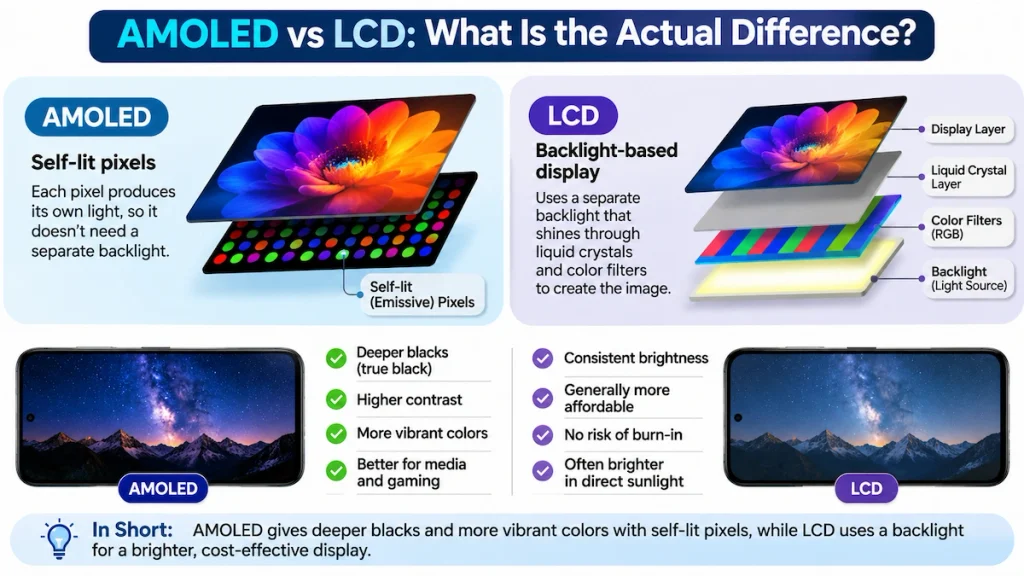
The first thing to understand is how these two display technologies work.
An LCD display uses a backlight to illuminate the pixels. Because of this, the light behind the screen remains active even when the display is showing black.
AMOLED works differently. Each pixel can produce its own light, which means individual pixels can effectively turn off when displaying black.
That is why black areas usually look much deeper on AMOLED displays, while the overall contrast can also be significantly stronger.
You do not necessarily notice this difference by looking at a specification sheet. It becomes much easier to see when you actually use the phone, especially with dark mode, movies and photos.
AMOLED vs LCD Comparison
| Feature | AMOLED | LCD |
| Black levels | Very deep blacks | Blacks are relatively lighter |
| Contrast | Usually excellent | Good to very good |
| Colors | Often vibrant | Generally natural, depending on panel |
| Viewing angles | Usually very good | Depends on panel quality |
| Refresh rates | 60Hz–120Hz+ common | 60Hz–120Hz available |
| Outdoor visibility | Can be excellent | Depends heavily on brightness |
| Battery advantage | Can save power with dark content | Backlight remains active |
| Burn-in risk | Possible over long-term use | No typical OLED burn-in |
| Cost | Usually higher | Often cheaper |
| Premium feel | Generally higher | Depends on panel quality |
This is a general comparison. Not every AMOLED panel is automatically better than every LCD panel. Actual display quality can vary significantly from one smartphone to another.
Best AMOLED and LCD Phones in Pakistan
If you want to see how these display technologies are used in real smartphones, the following models represent different price segments.
Important: Smartphone prices and availability in Pakistan can change frequently. Verify the current price, variant and warranty information before publishing.
1. Samsung Galaxy A17 — Budget AMOLED
The Samsung Galaxy A17 is a good option for buyers who want a Super AMOLED display, smooth scrolling and optical image stabilization (OIS) without moving into Samsung’s premium range.
It features a 6.7-inch FHD+ Super AMOLED display with a 90Hz refresh rate.
Quick Specs
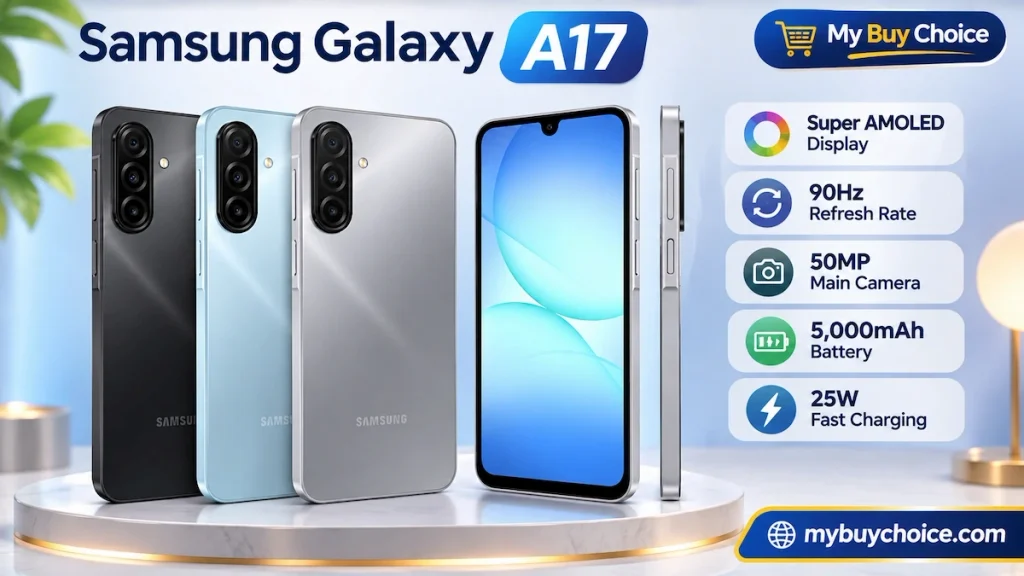
Display: 6.7-inch FHD+ Super AMOLED
Refresh Rate: 90Hz
Resolution: 1080 × 2340
RAM: 6GB / 8GB
Storage: 128GB / 256GB
Battery: 5,000mAh
Charging: 25W Fast Charging
Main Camera: 50MP with OIS + 5MP Ultra-Wide + 2MP Macro
Selfie Camera: 13MP
Processor: MediaTek Helio G99 (Pakistan 4G variant)
OS: Android 15 / One UI 7
Protection: IP54
6GB + 128GB
Rs. 64,499
8GB + 256GB
Rs. 77,499
Prices are approximate and may vary by retailer, variant and availability.
Best for: Buyers who want a Super AMOLED display, reliable everyday performance and OIS camera.
2. Redmi Note 14 — Value-Focused AMOLED
The Redmi Note series has traditionally attracted buyers who want a strong combination of specifications and display quality.
The Redmi Note 14 features a 6.67-inch 120Hz AMOLED display. A 120Hz refresh rate can make scrolling, animations and supported content feel noticeably smoother.
For buyers who care about display quality without moving into a much higher price category, this type of specification can be quite appealing.
Quick Specs
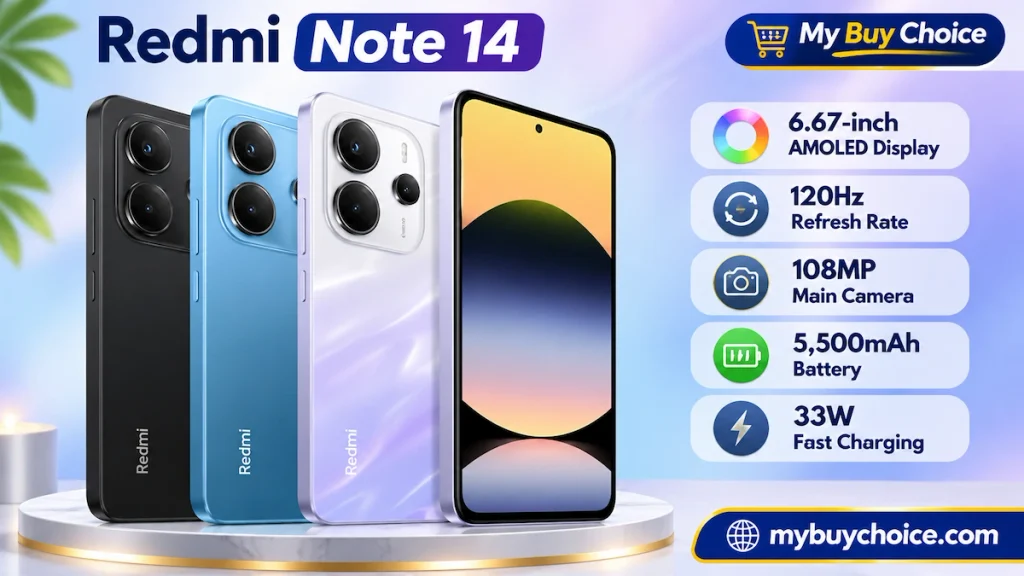
Resolution: FHD+ (1080 × 2400)
RAM: 8GB
Storage: 128GB / 256GB
Processor: MediaTek Helio G99-Ultra
Main Camera: 108MP
Selfie Camera: 20MP
Battery: 5,500mAh
Charging: 33W Fast Charging
OS: Android 14 / HyperOS
8GB + 128GB
Rs. 89,999
8GB + 256GB
Rs. 94,999
Best for: Buyers looking for a high-refresh-rate AMOLED display at a reasonable price.
3. Infinix Note 50 — Mid-Range AMOLED
The Infinix Note 50 is a good option for buyers who want a large AMOLED display, a high refresh rate and wireless charging features in the mid-range segment.
It features a 6.78-inch FHD+ AMOLED display with a 144Hz refresh rate, making it suitable for watching videos, browsing and smooth everyday use.
Quick Specs
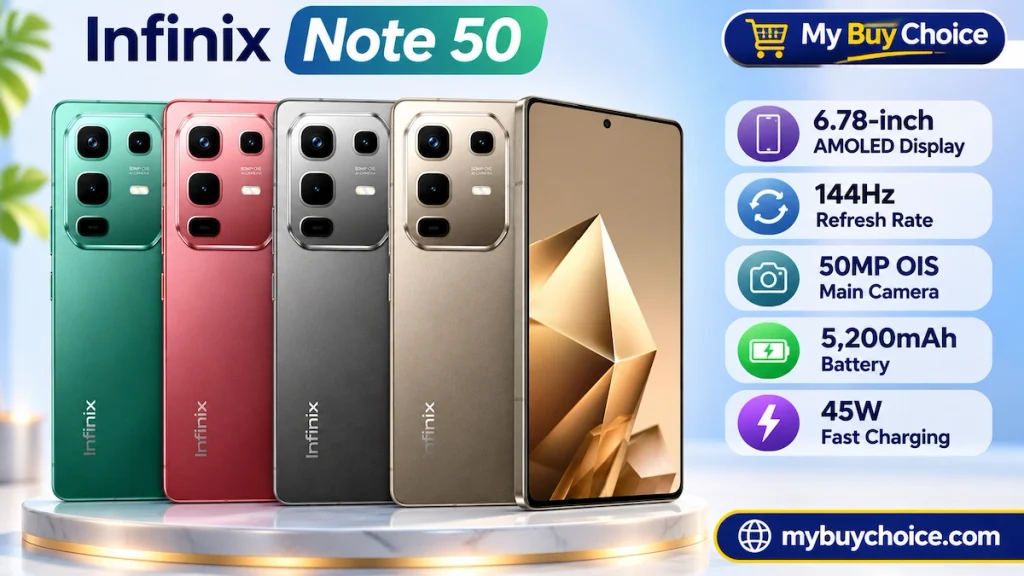
Display: 6.78-inch FHD+ AMOLED
Refresh Rate: 144Hz
Resolution: 1080 × 2436
RAM: 8GB (+ 8GB Extended RAM)
Storage: 256GB
Battery: 5,200mAh
Charging: 45W Wired Fast Charging + 30W Wireless MagCharge
Main Camera: 50MP with OIS + 2MP Macro
Selfie Camera: 13MP
Processor: MediaTek Helio G100 Ultimate
OS: Android 15 / XOS 15
Protection: IP64
Best for: Buyers who want a 144Hz AMOLED display, OIS camera and wireless charging.
8GB + 256GB
Rs. 117,999
4. Samsung Galaxy A36 5G — Upper Mid-Range Choice
The Samsung Galaxy A36 5G is a good option for buyers who want a premium Super AMOLED display, smooth performance and a capable camera system in the mid-range segment.
It features a 6.7-inch FHD+ Super AMOLED display with a 120Hz refresh rate, making it suitable for watching videos, gaming and everyday use.
Quick Specs
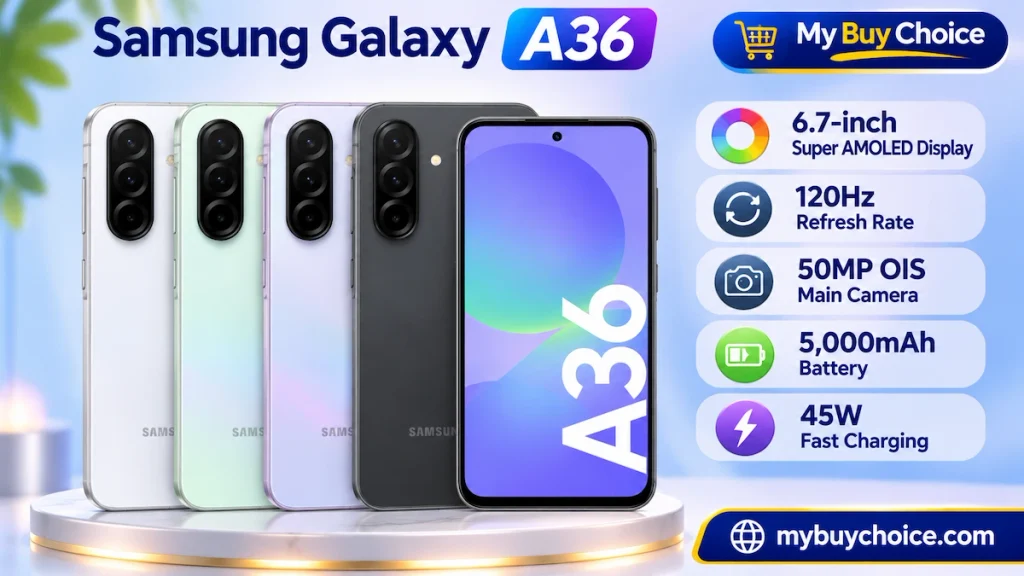
Display: 6.7-inch FHD+ Super AMOLED
Refresh Rate: 120Hz
Resolution: 1080 × 2340
RAM: 8GB
Storage: 256GB
Battery: 5,000mAh
Charging: 45W Fast Charging
Main Camera: 50MP OIS + 8MP Ultra-Wide + 5MP Macro
Selfie Camera: 12MP
Processor: Qualcomm Snapdragon 6 Gen 3
OS: Android 15 / One UI 7
Protection: IP67 Water and Dust Resistance
Best for: Buyers who want a smooth 120Hz AMOLED display, 5G connectivity and a good all-round smartphone.
8GB + 256GB
Rs. 114,999
5. Redmi Note 14 Pro — Premium AMOLED
The Redmi Note 14 Pro is a good option for buyers who want a high-quality AMOLED display, a powerful 200MP camera and smooth everyday performance.
It features a 6.67-inch FHD+ AMOLED display with a 120Hz refresh rate and Corning Gorilla Glass Victus 2 protection.
Quick Specs
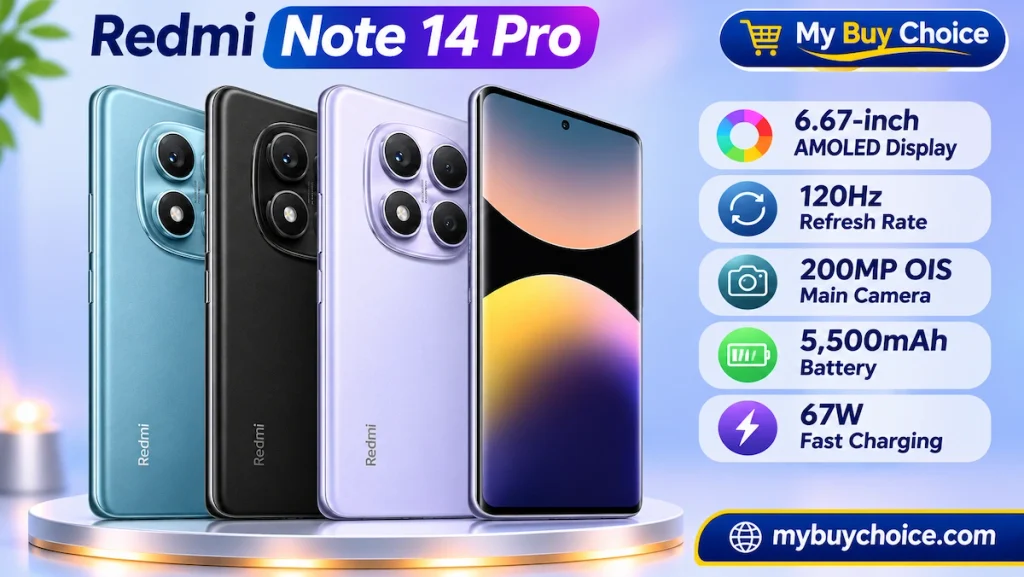
Display: 6.67-inch FHD+ AMOLED
Refresh Rate: 120Hz
Resolution: 1080 × 2400
RAM: 8GB / 12GB
Storage: 256GB / 512GB
Battery: 5,500mAh
Charging: 45W Turbo Charging
Main Camera: 200MP OIS + 8MP Ultra-Wide + 2MP Macro
Selfie Camera: 32MP
Processor: MediaTek Helio G100-Ultra (4G)
OS: Android 14 / Xiaomi HyperOS
Protection: Corning Gorilla Glass Victus 2, IP64
Best for: Buyers who want a 120Hz AMOLED display, high-resolution camera and premium features in the mid-range segment.
8GB + 256GB
Rs. 82,250
12GB + 512GB
Rs. 144,999
LCD Phones Worth Considering
AMOLED may get more attention these days, but LCD phones should not be dismissed.
LCD remains common in the budget market because it allows manufacturers to keep smartphone prices lower while still offering a perfectly usable screen.
6. Samsung Galaxy A07 — Budget LCD
The Samsung Galaxy A07 is an affordable option for buyers who prefer a large display, reliable everyday performance and Samsung’s software support at a budget-friendly price.
It features a 6.7-inch HD+ PLS LCD display with a 90Hz refresh rate, offering smoother scrolling for everyday browsing and social media use.
Quick Specs
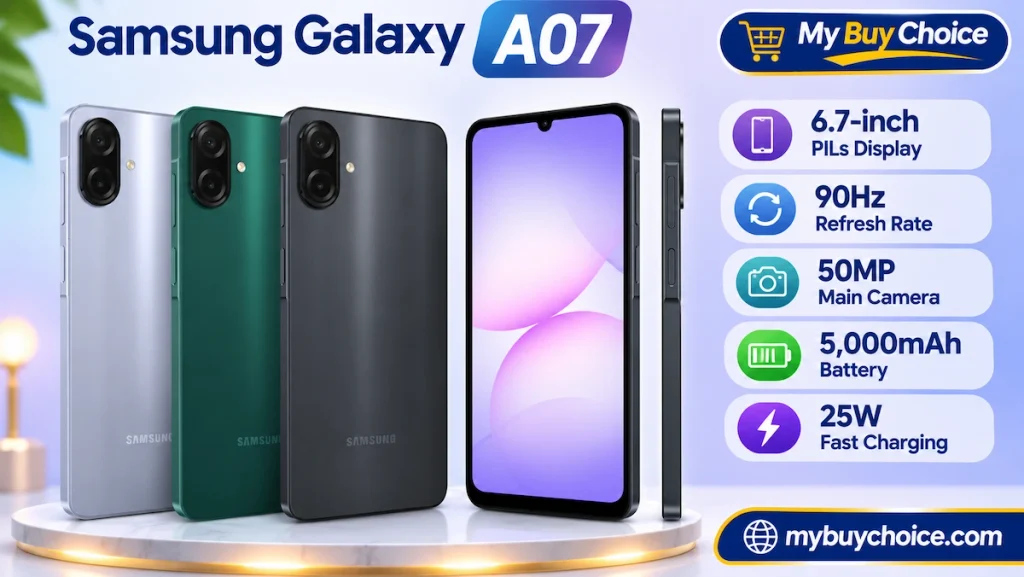
Display: 6.7-inch HD+ PLS LCD
Refresh Rate: 90Hz
Resolution: 720 × 1600
RAM: 4GB / 6GB
Storage: 64GB / 128GB
Battery: 5,000mAh
Charging: 25W Fast Charging
Main Camera: 50MP + 2MP Depth
Selfie Camera: 8MP
Processor: MediaTek Helio G99
OS: Android 15 / One UI 7
Protection: IP54
Expandable Storage: microSD card support
Best for: Budget buyers who want an LCD display, reliable everyday performance and long-term software support.
4GB + 64GB
Rs. 35,499
4GB + 128GB
Rs. 42,499
6GB + 128GB
Rs. 49,999
7. Redmi 15 — Budget LCD
The Redmi 15 is a good option for buyers who want a large display, smooth scrolling and long battery life at a budget-friendly price.
It features a 6.9-inch FHD+ LCD display with a 144Hz refresh rate, making it suitable for everyday browsing, watching videos and social media use.
Quick Specs
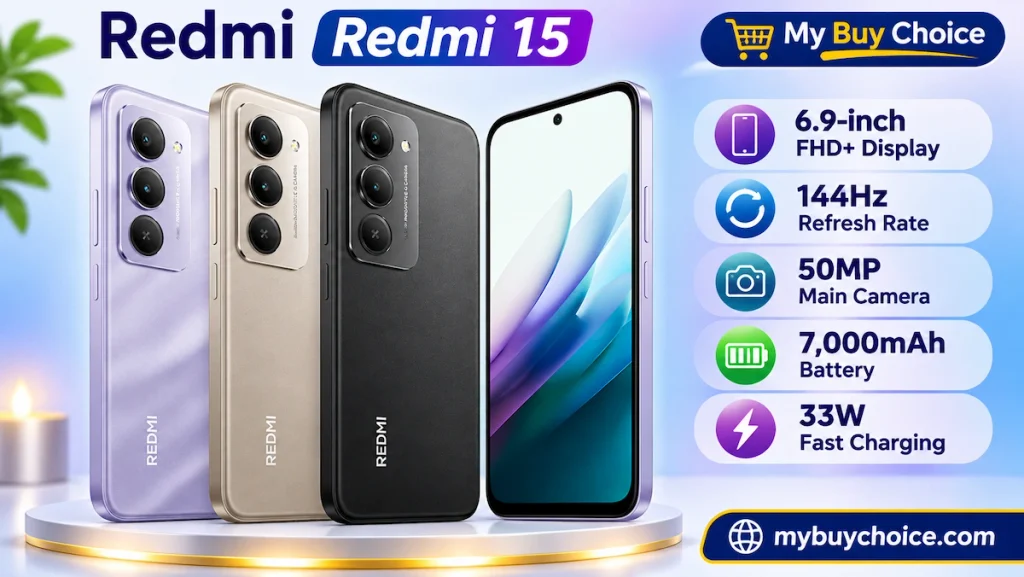
Display: 6.9-inch FHD+ LCD
Refresh Rate: 144Hz
Resolution: 1080 × 2340
RAM: 8GB
Storage: 128GB
Battery: 7,000mAh
Charging: 33W Fast Charging
Main Camera: 50MP + Auxiliary Lens
Selfie Camera: 8MP
Processor: Qualcomm Snapdragon 685
OS: Android 15 / Xiaomi HyperOS 2
Protection: IP64 Dust and Splash Resistance
Expandable Storage: microSD card support (Hybrid SIM Slot)
Best for: Buyers who want a large 144Hz LCD display, excellent battery capacity and smooth everyday performance.
8GB + 128GB
Rs. 54,799
AMOLED and LCD Phones at a Glance
| Phone | Display | Refresh Rate | Segment |
| Samsung Galaxy A17 | Super AMOLED | 90Hz | Budget |
| Redmi Note 14 | AMOLED | 120Hz | Mid-range |
| Infinix Note 50 | AMOLED | 144Hz | Mid-range |
| Samsung Galaxy A36 5G | Super AMOLED | 120Hz | Upper mid-range |
| Redmi Note 14 Pro | 1.5K AMOLED | 120Hz | Premium |
| Samsung Galaxy A07 | LCD | — | Budget |
| Redmi 15 | FHD+ LCD | 144Hz | Budget / Value |
AMOLED vs LCD: Picture Quality
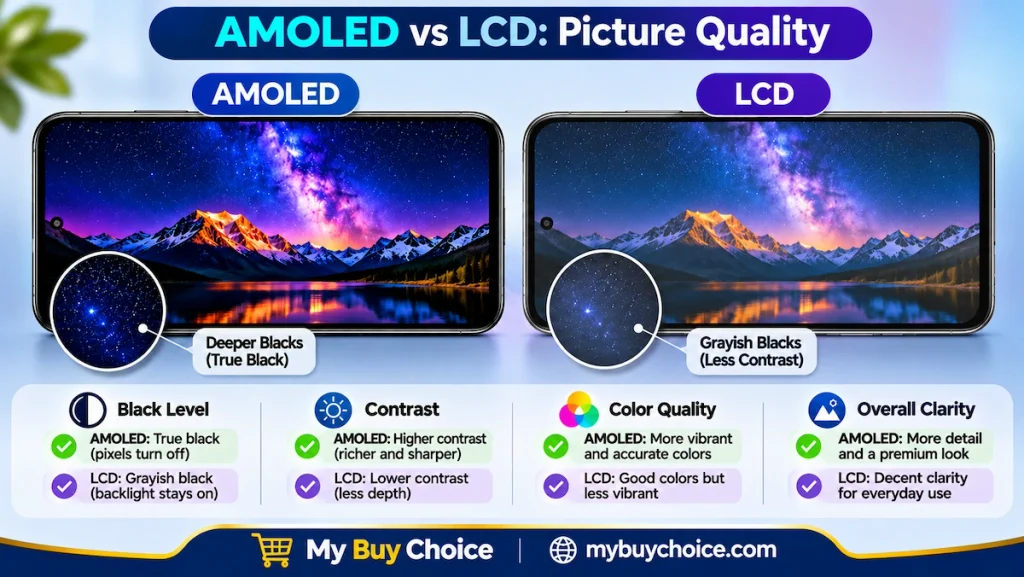
This is probably the area where the difference is easiest to notice.
Because AMOLED pixels can turn themselves off, black areas can appear genuinely black. This helps create stronger contrast in photos, videos and dark scenes.
LCD displays use a backlight, so black areas are usually not as deep as they are on AMOLED.
That said, do not judge a display only by the AMOLED or LCD label.
A good-quality LCD panel can look better than an average AMOLED panel in certain situations. Resolution, brightness, color tuning and the overall quality of the panel also matter.
Black Levels and Contrast
If you regularly use your phone at night, prefer dark mode or watch movies and videos with darker scenes, the AMOLED advantage becomes easier to appreciate.
Because the individual pixels can switch off, dark areas can remain truly black.
On an LCD, black can look slightly grey, particularly when you compare it directly with a good AMOLED panel.
This is one of the main reasons AMOLED displays generally offer much stronger contrast.
Battery Life: Does AMOLED Save More Battery?
There is some confusion around this topic.
AMOLED can potentially use less power when displaying dark content because black pixels do not need to produce light. Dark mode and black backgrounds can therefore reduce power consumption in some situations.
LCD displays use a backlight that remains active regardless of whether the content is bright or dark.
But real-world battery life depends on much more than display technology.
The processor, screen brightness, refresh rate, battery capacity, software optimization, mobile network and your actual usage all affect how long a phone lasts.
So it would be inaccurate to simply say that every AMOLED phone has better battery life than every LCD phone.
Outdoor Use and Brightness
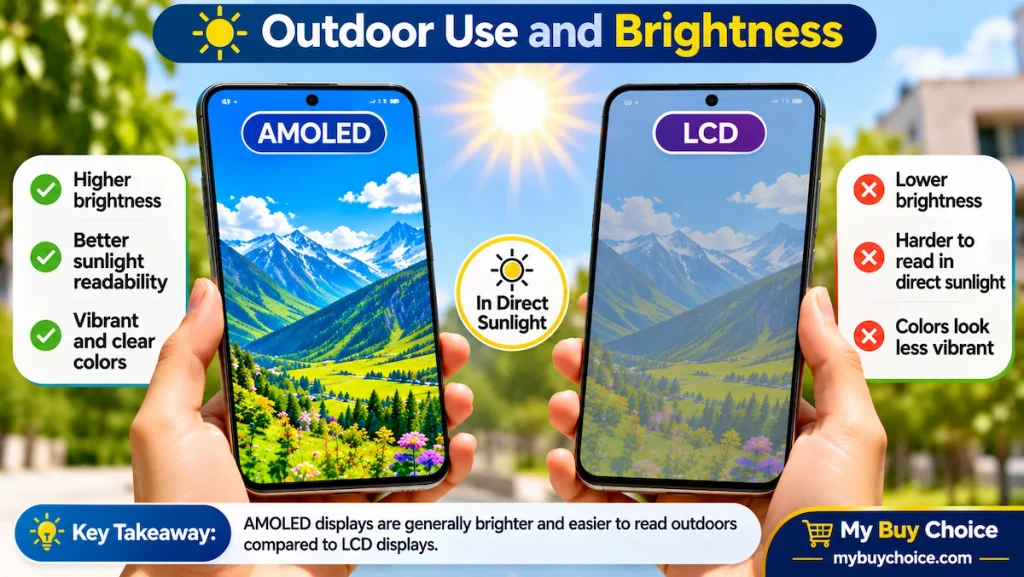
Outdoor visibility is especially important for smartphone users in Pakistan. During bright summer days, you quickly notice whether a screen is actually bright enough to remain readable outdoors.
This is where the AMOLED label alone is not enough.
You should also look at the actual brightness rating and understand whether the manufacturer is quoting typical or peak brightness.
A high-brightness LCD can perform very well outdoors, while a lower-brightness AMOLED is not automatically better in every situation.
Viewing Angles
Modern smartphone displays generally have much better viewing angles than older panels.
AMOLED displays usually offer wide viewing angles, with colors remaining relatively consistent when you look at the screen from the side.
LCD performance depends more heavily on the type and quality of the panel.
For normal, straight-on smartphone use, this may not matter much. But if you frequently share your screen with someone or view it from an angle, the difference can become more noticeable.
90Hz vs 120Hz: Display Type Isn’t the Only Thing That Matters
Refresh rate is another specification you should pay attention to.
A 60Hz display refreshes the screen around 60 times per second, while 90Hz and 120Hz displays can make scrolling and animations feel smoother.
This means an AMOLED display is not automatically the better choice in every comparison.
For example, if one phone has a 60Hz AMOLED panel while another has a 120Hz LCD, you have to decide whether you care more about deeper blacks and contrast or smoother scrolling.
Ideally, compare:
Panel type + refresh rate + brightness + resolution
And if gaming is important to you, touch response and the phone’s processor also become relevant.
Gaming: AMOLED or LCD?
For gaming, the AMOLED vs LCD question is only one part of the decision.
If two phones have similar processors and refresh rates, AMOLED’s contrast and colors can make games look more visually appealing.
But actual gaming performance depends much more on the processor, GPU, thermal management, touch response and software optimization.
If you regularly play games such as PUBG Mobile, do not choose a phone based on the display panel alone.
Burn-In: An Important AMOLED Consideration
Burn-in is a genuine consideration with AMOLED and OLED displays.
If the same static element remains on the screen for very long periods and is repeatedly displayed, some OLED/AMOLED panels can develop permanent image retention or burn-in.
This does not mean every AMOLED phone will develop burn-in. Modern smartphones also use various software and panel-level techniques to reduce the risk.
Still, if you plan to keep your phone for a very long time and frequently display static elements, it is a factor worth knowing about.
LCD does not have the same traditional OLED burn-in concern.
Durability: Is LCD Safer?
Display durability cannot be judged simply by whether a phone uses AMOLED or LCD.
The type of glass, screen protection, frame construction and overall build quality also matter.
Both types of displays can be damaged if the phone takes a hard fall.
If you regularly drop your phone, a good protective case and screen protector are more practical investments than choosing a display technology based purely on durability concerns.
Price Difference
This is where LCD has one of its strongest advantages.
LCD panels can help manufacturers keep costs under control, which is one reason they remain common in affordable smartphones.
AMOLED displays are generally associated with more expensive phones, although the technology has become increasingly common in mid-range and even some budget smartphones.
If your budget is limited, there is no need to spend extra money on AMOLED at any cost.
Sometimes a better processor, larger battery, better camera or longer software support can make a bigger difference to the overall phone experience.
So, Should You Buy an AMOLED or LCD Phone?
The answer depends on your priorities and budget.
Choose AMOLED if:
- You care about display quality
- Deep blacks and high contrast are important to you
- You watch a lot of YouTube, Netflix or other video content
- You frequently use dark mode
- You want a more premium-looking display
- You are comfortable spending a little more
LCD can make sense if:
- Your budget is limited
- You mainly need a phone for everyday tasks
- Display quality is not your top priority
- You are comparing the overall value of the phone
- You prefer to avoid the potential burn-in concern associated with OLED technology
For a Pakistani buyer, I would not make “AMOLED must be included” the only buying rule.
If an LCD phone costs significantly less while offering a better processor, larger battery or stronger overall specifications, it can still be the smarter purchase.
What Pakistani Buyers Should Check Before Buying
When buying a smartphone in Pakistan, the display is only one part of the decision.
1. Check the warranty
There can be a meaningful difference between officially distributed phones and grey-market/imported units. Confirm the warranty before buying.
2. Verify the exact variant
The same smartphone can be sold with different RAM and storage configurations. Make sure the seller’s listing matches the actual variant.
3. Check PTA status
If you are buying an imported phone, verify its PTA approval/status before making the purchase.
4. Look at brightness
If you use your phone outdoors frequently, brightness can be more important than simply choosing AMOLED over LCD.
5. Check the refresh rate
90Hz and 120Hz displays can make everyday scrolling feel smoother.
6. Compare the complete phone
A good display matters, but the processor, battery, camera, software updates, build quality and after-sales service also determine the overall value of a smartphone.
7 Things to Check When Buying a Phone Display
When comparing smartphone specifications, do not stop at the word “AMOLED” or “LCD.”
Check:
- Display type — AMOLED, OLED, LCD, etc.
- Resolution — HD+, FHD+, 1.5K, etc.
- Refresh rate — 60Hz, 90Hz, 120Hz
- Brightness — especially if you use the phone outdoors
- Screen size — large screen vs compact phone
- Screen protection — glass/protection information
- Real-world reviews and availability — especially before spending a significant amount
If possible, seeing the phone in person can also help. Brightness, colors and viewing angles are easier to judge with your own eyes than from a specification sheet.
Frequently Asked Questions
Is AMOLED better than LCD?
Generally, AMOLED has an advantage in display quality, especially when it comes to black levels, contrast and the overall premium look. But the final buying decision should consider the phone’s complete specifications and price.
Does an AMOLED phone have better battery life?
Not necessarily. AMOLED can save power with dark content, but actual battery life also depends on the processor, battery capacity, brightness, refresh rate and software optimization.
Is an LCD display bad?
No. A good-quality LCD can be perfectly suitable for everyday smartphone use. The main difference is that its black levels and contrast generally will not match a good AMOLED panel.
Is a 120Hz LCD better than a 60Hz AMOLED?
It depends on what you value more. A 120Hz LCD can feel smoother when scrolling, while a 60Hz AMOLED will generally offer deeper blacks and better contrast. Both specifications should be considered together.
Can AMOLED displays suffer from burn-in?
Yes. AMOLED/OLED displays can develop burn-in after prolonged exposure to static content. This is not something every user will experience, but it is a legitimate long-term consideration.
Is AMOLED better than LCD in sunlight?
Not automatically. Actual brightness is more important than the display technology alone. A high-brightness LCD can perform very well outdoors.
Is an AMOLED phone worth buying on a budget?
If the price difference is reasonable and the rest of the phone’s specifications are good, AMOLED can be a worthwhile upgrade. But it does not make sense to choose a weaker phone simply because it has an AMOLED display.
What should I check before buying an AMOLED phone in Pakistan?
Check the official warranty, PTA status, exact RAM/storage variant, brightness, refresh rate and the reliability of the seller. Also compare the phone’s overall specifications rather than focusing only on the display.
Final Verdict
If you simply ask me which is better between AMOLED vs LCD, my preference for display quality would be AMOLED.
Deep blacks, stronger contrast and a generally more premium-looking picture are its biggest advantages.
That does not mean an LCD phone is automatically a bad choice.
If your budget is limited, a good LCD phone can still offer excellent value. And if choosing AMOLED means compromising too much on the processor, battery, camera or software support, there is no reason to spend extra money just for the display technology.
Bottom line: If display quality is important to you, AMOLED is generally the better choice. But when buying a smartphone, consider display + performance + battery + software + warranty + price together.
