Choosing the right AC size is one of the first things you should decide before comparing brands, prices or features.
A common mistake is to buy a bigger AC simply because it sounds more powerful. But bigger is not always better. On the other hand, an AC that is too small may struggle to keep the room comfortable during Pakistan’s hottest days.
So, what is the right AC size for your room in Pakistan?
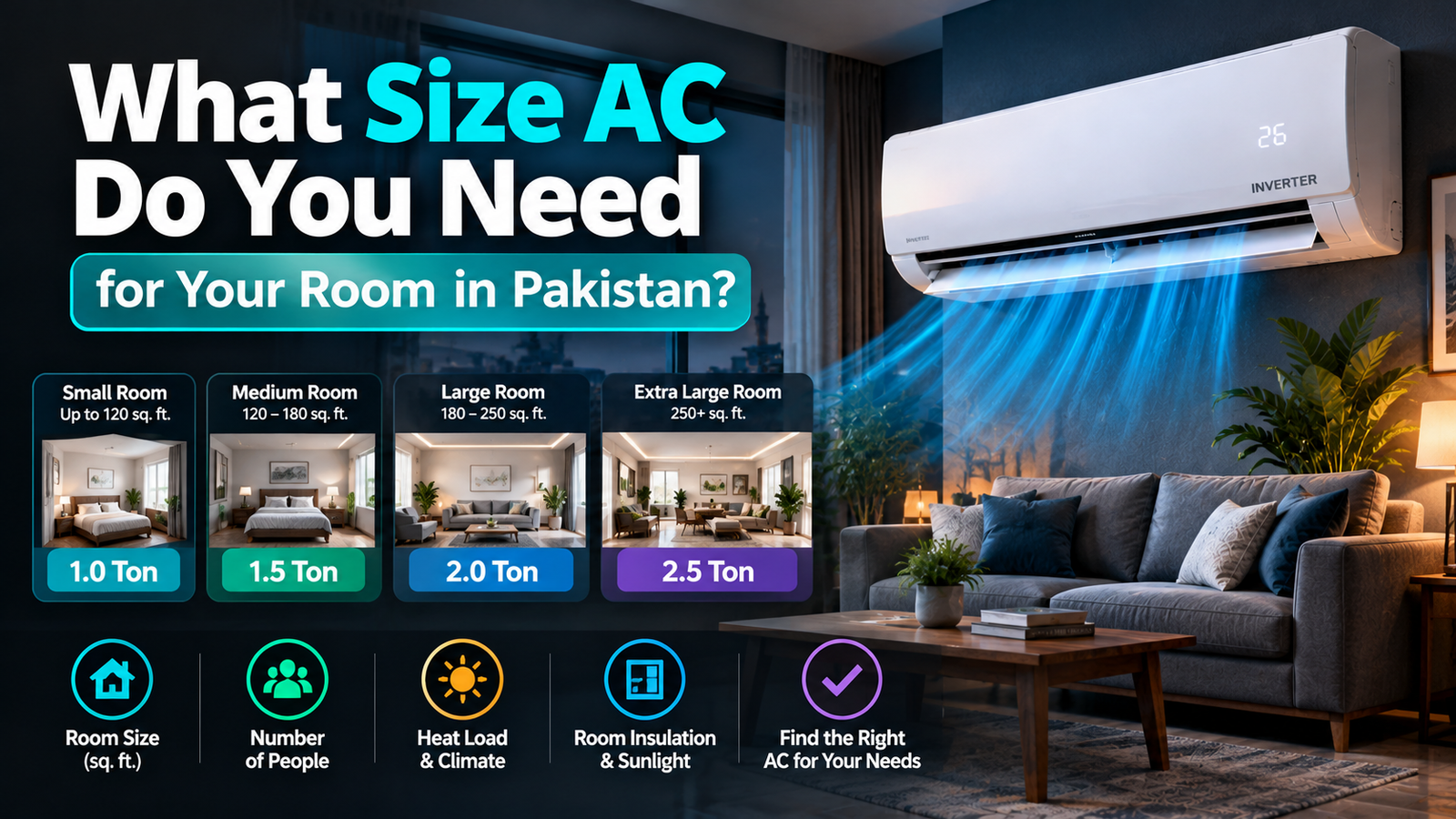
For many normal bedrooms, 1 ton is a sensible starting point. Larger bedrooms and living rooms often move into the 1.5-ton range, while large halls and open spaces may need 2 tons or more.
The important thing is to look at room size and heat load together.
Quick Answer: Which AC Size Do You Need?
Here is a practical starting guide:
| Room Size | AC Size to Consider |
| 10×10 ft | 1 Ton |
| 10×12 ft | 1 Ton |
| 12×12 ft | 1 Ton |
| 12×14 ft | 1–1.5 Ton |
| 12×15 ft | 1.5 Ton |
| 12×18 ft | 1.5 Ton |
| 14×16 ft | 1.5 Ton |
| 16×18 ft | 1.5–2 Ton |
| Large living room / hall | 2 Ton or higher |
“These recommendations are general starting points, not fixed sizing rules. Actual AC capacity depends on room height, insulation, sunlight exposure, windows, occupancy and local climate. For more accurate sizing, a proper cooling-load assessment is recommended.”
A 12×12 ft room on a shaded middle floor can have a very different cooling requirement from a 12×12 ft room directly under a hot roof with strong afternoon sunlight.
What Does AC Tonnage Mean?
The tonnage of an AC refers to its cooling capacity, not its weight.
As a general reference:
- 1 Ton ≈ 12,000 BTU/hour
- 1.5 Ton ≈ 18,000 BTU/hour
- 2 Ton ≈ 24,000 BTU/hour
The higher the tonnage, the more heat the AC can remove from the room.
Actual AC models can have different rated cooling capacities, so it is always worth checking the manufacturer’s specifications before buying.
1 Ton AC: Which Rooms Is It Suitable For?
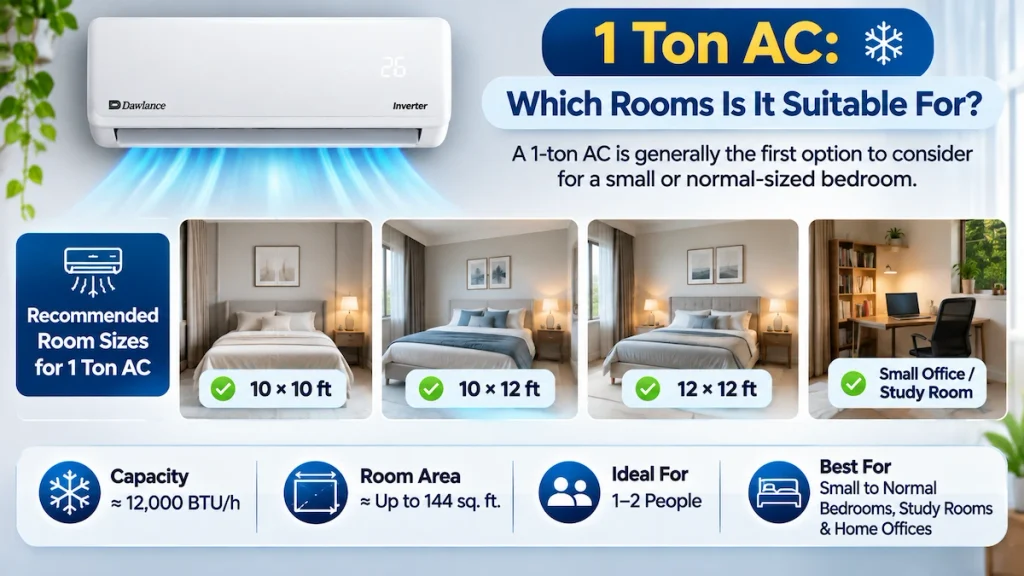
A 1-ton AC is generally the first option to consider for a small or normal-sized bedroom.
It can make sense for rooms such as:
- 10×10 ft
- 10×12 ft
- 12×12 ft
- small office or study room
For a normal bedroom with reasonable insulation and moderate sunlight, there is often no reason to move to 1.5 ton simply because it has more cooling capacity.
1 Ton ACs Worth Checking
Dawlance Cruise Plus Inverter — 1 Ton
Best for: Normal bedrooms
Rs. 107,000

PEL InverterOn ATOM — 1 Ton
Best for: Budget-conscious buyers
Rs. 110,900
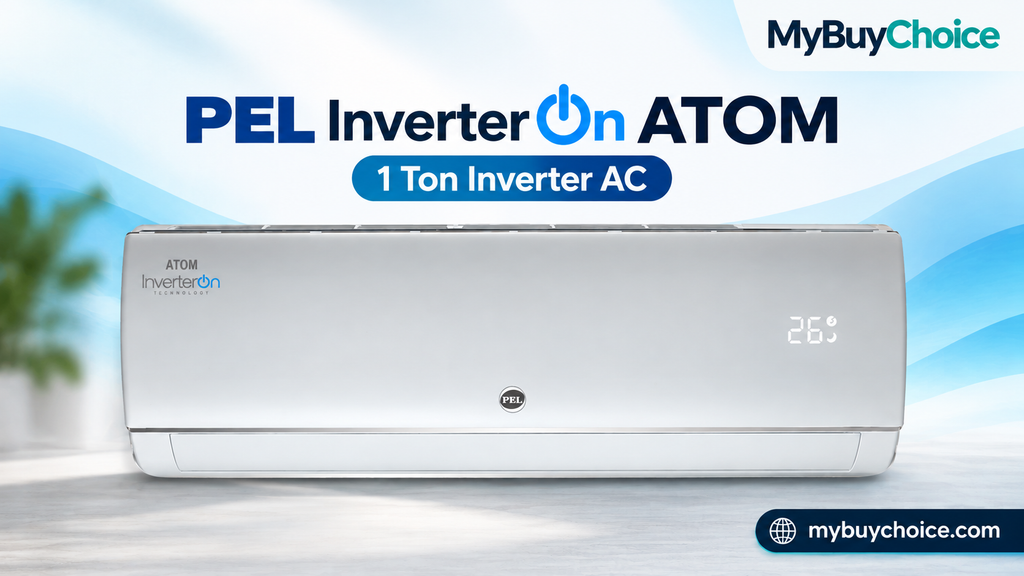
These are examples rather than a ranking. Compare the exact model, price, warranty and service before buying.
1.5 Ton AC: When Should You Choose It?
A 1.5-ton AC becomes more suitable when the room is larger or has a higher cooling load.
It is worth considering for:
- large bedrooms
- master bedrooms
- medium-sized living rooms
- top-floor rooms
- rooms with strong sunlight
- rooms with large windows
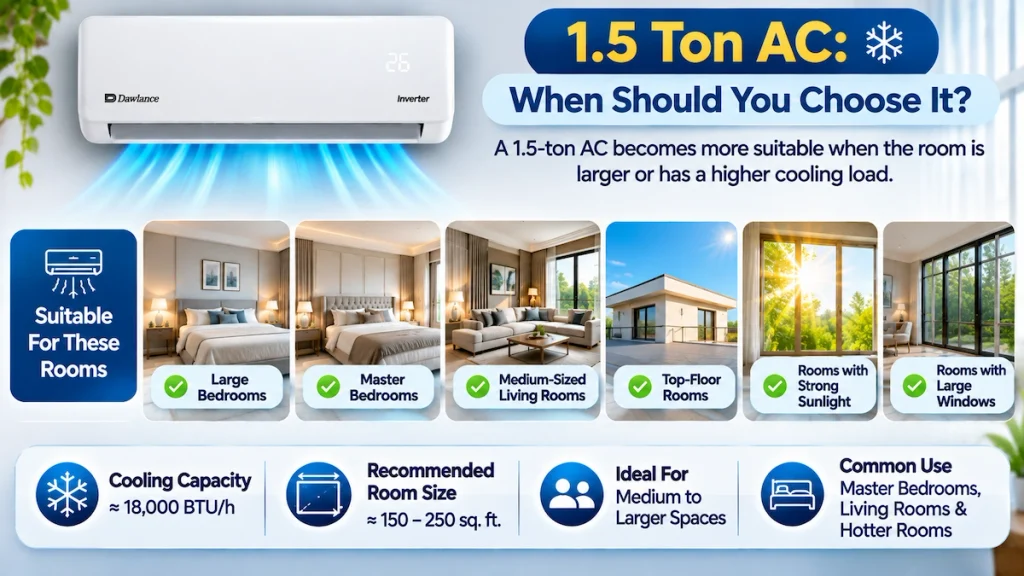
For example, a 12×15 ft room has 180 square feet of floor area, so 1.5 ton becomes a more reasonable starting point, depending on the room conditions.
1.5 Ton ACs Worth Checking
Dawlance Cruise Plus Inverter — 1.5 Ton
Best for: Larger bedrooms and medium living rooms
Rs. 123,000

Dawlance EnerCon X T3 Inverter — 1.5 Ton
Best for: Buyers comparing value-oriented options
Rs. 154,000

Again, these are examples to help you start comparing. The cheapest model is not automatically the best choice for every room.
When Do You Need a 2 Ton AC?
A 2-ton AC is generally more relevant for a large living room, hall or open space.
You should not buy 2 ton simply because you want faster cooling. The room should actually have a cooling requirement that justifies the additional capacity.
Dawlance Elegance X — 2 Ton
Best for: Large living rooms and halls
Rs 185,999

For an ordinary bedroom, 2 ton would usually be unnecessary.
Room Size Isn’t the Only Factor
This is where simple AC size charts can sometimes be misleading.
Two rooms with exactly the same dimensions can need different AC capacities.
Top-floor room
A room directly under an exposed roof can receive considerably more heat during summer.
Direct sunlight
Strong afternoon sunlight, particularly through large windows, can increase the cooling load.
Number of people
A bedroom used by one or two people has a different heat load from a living room regularly occupied by several people.
Ceiling height
A room with a significantly higher ceiling contains more air and can have a different cooling requirement.
Insulation
Poor insulation allows heat to enter the room more easily, increasing the workload on the AC.
So, don’t treat a rule such as “1 ton is enough for exactly X square feet” as a guarantee. Proper AC sizing also considers factors such as sunlight, ceiling height and occupancy.
A Simple Example: Same Room, Different AC
Take a 12×12 ft bedroom.
If it is:
- on a middle floor
- reasonably insulated
- not heavily exposed to afternoon sunlight
- normally occupied by one or two people
then 1 ton may be a sensible choice.
Now imagine the same room is directly under the roof, receives strong afternoon sunlight and has poor insulation.
In that situation, 1.5 ton may make more sense.
The room hasn’t changed size. The heat load has.
That’s why room dimensions should be the starting point, not the only factor.
What Happens If You Buy the Wrong AC Size?
If the AC is too small
You may experience:
- slower cooling
- longer running times
- difficulty reaching the desired temperature
- reduced comfort during extreme heat
If the AC is too large
More cooling capacity is not automatically better.
An oversized AC can cool a room quickly without necessarily providing the best overall comfort or efficiency.
The goal is simple:
Buy an AC that matches the room, not the biggest AC your budget allows.
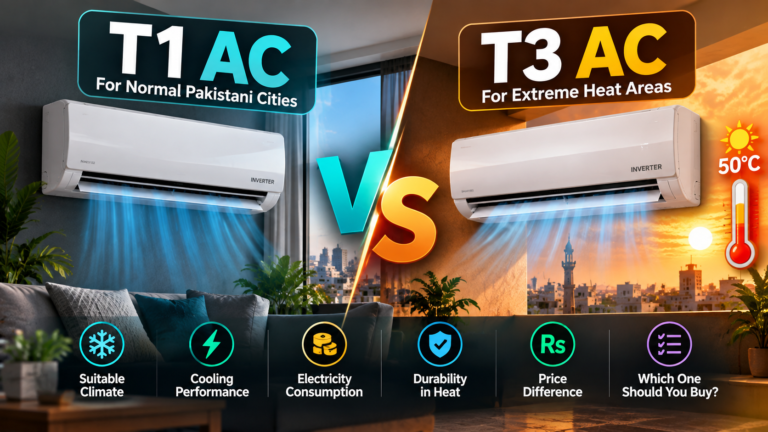
What About T1 and T3?
T1/T3 is a separate consideration from tonnage.
Tonnage = cooling capacity
T3 = operation under hotter outdoor conditions
A T3 AC can be useful for particularly hot rooms, top-floor spaces and demanding summer conditions. But you don’t automatically need T3 just because you live in Pakistan.
First choose the appropriate capacity, then decide whether T3 is actually useful for your room.
How to Choose Your AC Size in 3 Steps
Step 1: Measure the room
- Multiply:
- Length × Width = Floor Area
- For example:
- 12 × 15 = 180 sq ft
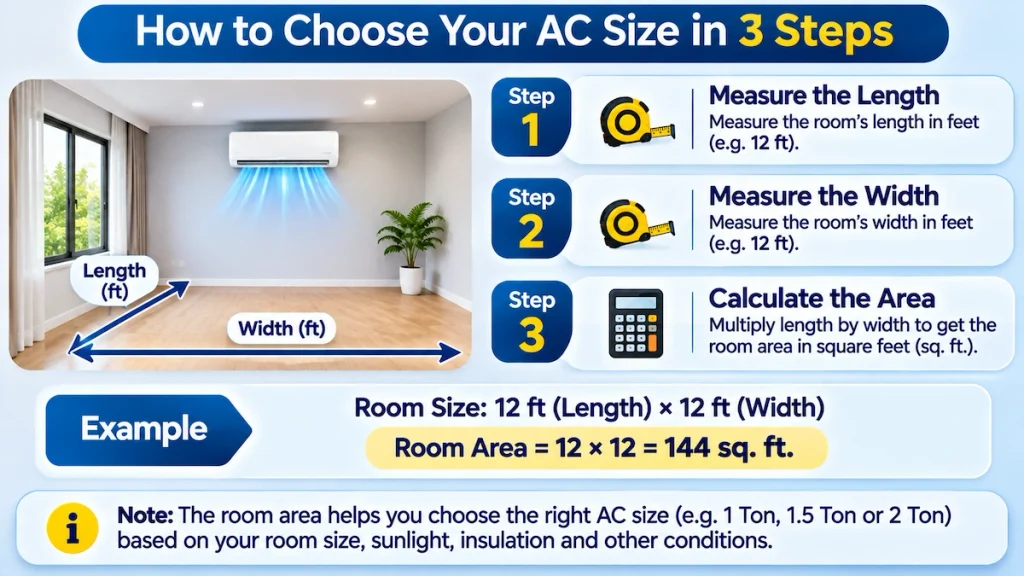
Step 2: Check the size chart
Use the chart above as your starting point for 1 ton, 1.5 ton or 2 ton.
Step 3: Check the heat load
Ask yourself:
- Is it a top-floor room?
- Does it get strong afternoon sunlight?
- Are there large windows?
- Is the ceiling unusually high?
- Are several people normally inside?
- Is insulation poor?
If several of these apply, don’t blindly follow the basic room-size recommendation.
Which AC Size Should You Buy?
For a quick decision:
Small/normal bedroom → 1 Ton
Large bedroom → 1.5 Ton
Medium/large living room → 1.5 Ton
Large hall or open space → 2 Ton or higher
These are practical starting points, not strict formulas.
Frequently Asked Questions
What AC size is best for a 10×12 room?
A 1-ton AC is generally a sensible starting point for a normal 10×12 bedroom. A higher capacity may be needed if the room has an unusually high heat load.
Is 1 ton enough for a 12×12 room?
It can be. For a normal bedroom with reasonable conditions, 1 ton is a practical starting point. A hot top-floor room may require more capacity.
What size AC do I need for a 12×15 room?
A 1.5-ton AC is generally worth considering for a 12×15 room, particularly if it receives significant sunlight or has other heat-load factors.
What AC size is best for a top-floor room?
There is no single answer. A top-floor room usually has a higher heat load, so the same-sized room may need more cooling capacity than a middle-floor room.
Does a bigger AC cool better?
A bigger AC has more cooling capacity, but that doesn’t mean it is the right choice for every room. Proper sizing is more important than simply buying a larger unit.
Is 1.5 ton enough for a living room?
It can be suitable for many medium-sized living rooms, but the actual requirement depends on room size, sunlight, windows, ceiling height and occupancy.
Final Verdict
Choosing the right AC size is easier when you follow the right order.
Start with room dimensions, then consider sunlight, floor level, insulation, ceiling height and occupancy.
For many normal bedrooms, 1 ton is a sensible starting point. Larger bedrooms and many living rooms move into the 1.5-ton range, while large halls and open spaces may need 2 tons or more.
Don’t choose the biggest AC just because you can afford it.
Choose the capacity that actually matches your room.
Once you’ve decided the size, you can compare brands, prices, warranty, efficiency and features to find the model that gives you the best value for your money.